
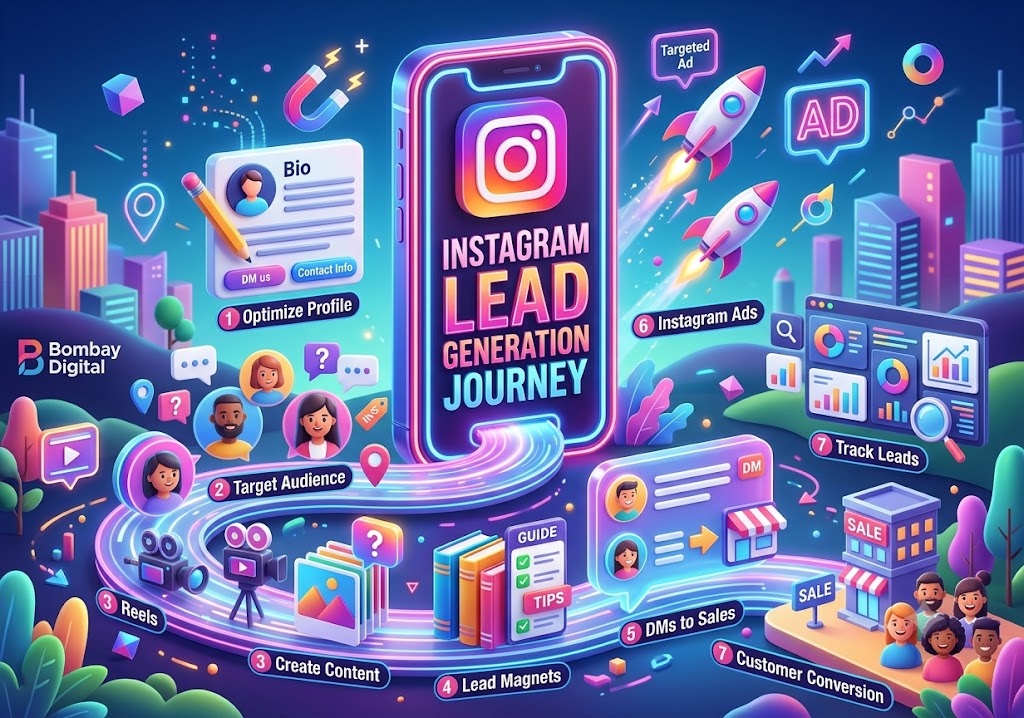
How to Use Instagram to Generate Leads for Your Business
While having likes and followers on Instagram is great, the real goal is to convert them into customers. Many companies post regularly, but fail to receive enquiries or sales. This is where Instagram lead generation comes in. It will engage with people who know what your products or services are and are willing to take a further step which could include a DM, completing a form, calling your business or even sending a WhatsApp message. A well-designed profile, informative content, and actionable buttons can make it much simpler for customers to reach out to your business.
The first step in lead generation from Instagram is to make the profile clear and understand the type of audience to be targeted. Provide material that responds to their queries, something useful and let them know how they can contact you. Instagram ads can also be used to reach more potential customers. Monitor your inquiries and watch what posts or campaigns work best to earn feedback and make adjustments to your plan over time.
Businesses looking for Instagram marketing services to generate leads in Mumbai can also work with a digital marketing team to plan content, manage campaigns, and improve lead quality.
What Is Instagram Lead Generation?
Instagram lead generation means using your Instagram account to find people who are interested in your products or services and encouraging them to get in touch with your business. Instead of focusing only on likes and followers, the aim is to turn that interest into genuine enquiries.
For example, a potential customer could become a lead by:
- Sending a DM: Asking about your product, pricing, or services.
- Filling out a form: Sharing their details to get more information or request a quote.
- Contacting you on WhatsApp: Asking questions or discussing their requirements.
- Calling your business: Getting in touch to learn more about what you offer.
- Visiting your website: Filling out an enquiry form after clicking your Instagram link.
The main goal is to reach people who are genuinely interested in your business and give them an easy way to connect with you. Having more followers is useful, but getting relevant enquiries from people who could become paying customers is what makes Instagram lead generation valuable.
How to Generate Leads from Instagram: 7 Steps
Step 1: Optimize Your Instagram Profile for Leads
The layout of your Instagram profile should be clear and easy to understand for visitors, so they know what your business is and what you offer, and how to contact you. Use a short bio to describe your products/services and show potential customers how useful your business is. Include a clear CTA like “DM us for enquiries” or “Book a free consultation” to guide them on the next steps of the process. It’s also best to add a functional website link, WhatsApp, or a booking page or enquiry form. Share services, product information, FAQs, contact information and customer reviews using Instagram Highlights. If they can grasp what you’re about and locate the information they need in a timely fashion, you’ve just increased the chances of them reaching out and becoming potential leads.
What you should do:
- Create a concise bio: Describe your business and the audience you serve.
- Include a compelling CTA: Include CTAs like “DM us for details,” “Book a consultation,” or “Get a free quote.
- Include a relevant link: Lead visitors to your website, landing page, booking form or WhatsApp.
- Organize your Highlights: Include services, customer reviews, FAQs, pricing information, and contact details.
Example: A digital marketing agency could write, “Helping businesses grow through SEO, social media, and paid ads. DM us for a free consultation.”
Step 2: Define Your Target Audience and Lead Goal
When you’re planning a new post, it is crucial that you know who you are making the content for and what you want them to do once they view your content. Consider your target customers, what they like, what they struggle with, and how your product or service can assist them. This will help you produce material they’ll be interested in and will capture their interest. It is also important to think about what you want users to do next, such as DM you, visit your website or fill out an enquiry form or reach out to you via WhatsApp. If your content is relevant to the right audience, and then clearly offers them a way forward, you will be far more likely to generate the right type of interest and enquiry and ultimately, the right customers.
What you should do:
- Know your target customer: Geography, interests, needs, how they buy.
- Know what their problems are: Consider the questions they ask, and the challenges they want to solve.
- Establish a clear call to action: Determine if you prefer DMs, phone calls, WhatsApp messages or form submissions.
- Select an appropriate CTA: Ensure that your call to action is aligned with the purpose of each post.
Example: If you run a salon in Mumbai, your content can target people looking for salon services in your area and encourage them to book an appointment through WhatsApp.
Step 3: Create Content That Attracts Leads
Your content should provide something for people to do and find out more about your business. Post a variety of Reels, posts on carousel, and Stories to highlight products or services, address frequently asked questions, and provide relevant information. There’s also the ability to upload customer reviews, product demonstrations, and behind-the-scenes videos to explain your company in more detail. Clearly prompt people to do something with your post, whether that be sending you a DM, visiting your website or enquiring more about your services. This will help to convert inquiries you get for your content into real customer inquiries.
What you should do:
- Create Reels: Share product demonstrations, quick tips, service highlights, and behind-the-scenes videos.
- Use carousel posts: Explain a process, answer common questions, or share useful information in simple steps.
- Post interactive Stories: Use polls, question stickers, and quizzes to understand what your audience needs.
- Include clear CTAs: Encourage people to send a DM, visit your website, or request more information.
Example: A skincare brand could post a Reel explaining a common skincare concern and invite viewers to DM the brand for help choosing a suitable product.
Step 4: Use Lead Magnets to Collect Contact Details
A lead magnet is a free item of value that you offer to your audience to get them to provide you with their information and engage in more research about your company. It may be a guide, checklist, template, free consultation, or anything that could assist your audience with a problem or understanding. The idea is to provide a reason for folks to connect with you rather than just asking them for information. Be sure to have something that’s relevant to the products or services you offer to make it interesting to those who are interested in your business. For instance, if you are in the business of digital marketing, you can send a free SEO checklist or a simple audit of a website to a business owner to help them recognize the spots that ought to be improved. If people find your offer helpful, they’ll seek more information, ask questions and think about your services when they need them, and they’ll become more engaged with your business.
What you should do:
- Offer a free resource: Create a checklist, guide, template, or product catalogue.
- Provide a free consultation or audit: This can work well for service-based businesses.
- Use a simple form: Collect only the information you need, such as a name, email address, or phone number.
- Promote your offer: Share it through Reels, Stories, carousel posts, and your Instagram bio link.
Example: A digital marketing agency could offer a free website SEO checklist and invite interested business owners to submit their website details through a form.
Step 5: Turn Instagram DMs into Sales Conversations
Instagram DMs are a straightforward method to connect with your business to find out more about your products and services. A message may come into your inbox to find out the price of something, whether something is in stock or not, how something works, or if you have special needs or requirements. Try to identify what the person is looking to achieve from the question, rather than just giving your answer, and give information that will help the person to make a decision. If they ask you what services you provide, you can explain what you offer, provide examples of services you have provided, and offer suggestions of what you recommend following that service based on their needs. Respond in a polite and casual manner, and refrain from forcing your customers to make a buying decision before they’re ready. You can establish a trustful relationship and transform everyday dialogue into a legitimate business enquiry by getting the answers right and making it easy for them to obtain the information they seek.
What you should do:
- Reply promptly: Answer enquiries while the person is still interested.
- Understand their requirements: Ask relevant questions before recommending a product or service.
- Share useful information: Provide pricing, service details, examples, or a relevant link.
- Guide them towards the next step: Offer a consultation, booking link, enquiry form, or product page.
Example: A potential customer messages, “Hi, do you provide SEO services for small businesses?”
You could reply, “Hi! Yes, we help small businesses improve their search visibility through SEO. Could you share your website link and the main services you want to promote? We can understand your requirements and suggest the next steps.”
This keeps the conversation natural while helping you understand whether the person is a suitable lead.
Step 6: Use Instagram Ads for Lead Generation
Instagram DMs are an easy way to communicate your business’ message to the user when they wish to learn more about the products and/or services you offer. You might get an email asking you about the cost of an item, whether or not it’s available, how it works, or whether you have a need or a requirement. Aim to avoid answering the question and instead try to learn why the question is being asked and then provide information to assist in making the decision. If they want to know what you do then you can explain what you provide, give them examples of some of the other services you have provided and depending on their needs, suggest what you would recommend they do after you have been done. Be friendly and relaxed in your replies, and don’t force your customers to buy something before they are ready. Getting the answers right and communicating them clearly and simply can help build trust and make the discussion a real business question.
What you should do:
- Choose a campaign objective: Select an appropriate lead generation or messaging setup based on your goal and available Meta Ads options.
- Define your audience: Use relevant location, demographic, interest, or eligible custom audience targeting.
- Create a clear offer: Promote something specific, such as a free consultation, product enquiry, or service quotation.
- Test your creatives: Compare different images, Reels, hooks, and CTAs to see which generate better-quality leads.
Example: A real estate consultant could run Instagram ads targeting relevant locations and invite interested people to submit their details to learn more about available properties.
Remember that getting more enquiries doesn’t always mean getting better leads. Review lead quality and conversions, not just the number of forms submitted.
Step 7: Track Leads and Improve Results
Once you start generating leads, review your performance regularly to understand which activities are bringing enquiries and which need improvement.
What you should do:
- Track profile visits: See whether your content is encouraging people to explore your business.
- Monitor link clicks: Check whether visitors are clicking through to your website or enquiry page.
- Count enquiries: Record relevant DMs, calls, WhatsApp messages, and form submissions.
- Review lead quality: Identify which enquiries are relevant to your business and which turn into customers.
Example: If your Reels receive plenty of views but very few enquiries, you may need a clearer CTA or a more relevant offer. If your ads generate enquiries but few sales, review your audience targeting, lead form, and follow-up process.
Instagram Lead Generation Ideas That Work for Small Businesses
There’s no need to have a large marketing budget or a complex marketing strategy to build leads on Instagram when it comes to small businesses. By leveraging your current audience and content, you can attract people who are interested in your products or services. The trick is to provide an incentive and make it easy for them to follow through with your business.
Running a giveaway can help you to expand your reach to new audiences and create an increased engagement rate on your Instagram page. Pick something from your business and you’ll get people interested in your business. For instance, a clothing company can give one of its popular clothing outfits away, or a salon can offer a free service. Ask the participants to follow you or to leave a comment on the post; just be sure that the giveaway adheres to Instagram’s promotion rules. The objective is to gain the attention of people who are relevant as opposed to simply getting more followers.
Free audit or consultation: If you perform an audit or a consultation, it can be beneficial to begin the discussion with a potential customer by offering one free audit or one consultation. It provides an opportunity for people to learn the purpose of your service and decide whether it suits them before paying any money. For instance, a digital marketing agency may provide a fundamental website SEO review to assist business owners in recognizing areas to improve. You can promote from Reels, Stories or Carousel Posts and direct interested audience to a straightforward enquiry form or DM conversation.
Encourage commenting on a post if there is something useful they can receive like a checklist, guide, catalogue, or more information about a service. Once an interest has been expressed, appropriate direction to the relevant resource can be provided via an appropriate DM process. For instance, a fitness teacher may encourage discussion about a post to get more information about an introductory workout routine. Make sure that the offer is still relevant, describe what it is, and adhere to Instagram’s rules of messaging. This can be a way of identifying individuals interested in a specific service or subject.
Organic vs Paid Instagram Lead Generation: Which Is Better?
| Comparison | Organic Instagram Lead Generation | Paid Instagram Lead Generation |
| Meaning | Attracting potential customers through regular content and engagement without paying for ads. | Using Instagram ads to reach selected audiences and generate enquiries. |
| Methods | Reels, Stories, carousel posts, collaborations, and DMs. | Paid campaigns promoting specific products, services, or offers. |
| Cost | No advertising spend is required, but creating content and managing the account takes time and effort. | Requires an advertising budget, along with time to create and manage campaigns. |
| Time to Results | Results can take time and may vary depending on your content and audience. | Enquiries may start coming in sooner, depending on the campaign, budget, and offer. |
| Audience Reach | Reaches existing followers and potentially new audiences through content discovery and sharing. | Helps you reach selected audiences based on available targeting options. |
| Trust Building | Helps build relationships and credibility through consistent, useful content. | Can introduce your business to new people and promote specific offers. |
| Best For | Businesses looking to build a long-term audience and attract leads organically. | Businesses looking to promote an offer and reach potential customers more directly. |
| Main Limitation | Growth and enquiries can be slow or unpredictable. | Results depend on the budget, audience targeting, creative quality, and offer. |
Common Instagram Lead Generation Mistakes to Avoid
Avoid these common mistakes when planning your Instagram lead generation strategy:
- Not using a CTA: If you don’t tell people what to do next, they may view your content and move on. Add a clear action to relevant posts.
- Replying to DMs too slowly: Delayed responses can cause interested people to lose interest or contact another business.
- Posting only entertainment content: Reels can increase reach, but your content should also explain your offer, answer questions, and build trust.
- Ignoring lead tracking: Without tracking enquiries and conversions, it’s difficult to understand which activities are generating business.
- Targeting the wrong audience: Reaching people who aren’t interested in your products or services can lead to irrelevant enquiries.
How Long Does It Take to Get Leads from Instagram?
The time it takes to generate leads depends on your industry, audience, offer, content quality, and marketing budget. There is no fixed timeline that works for every business.
- Organic Instagram marketing: It may take around 2–3 months of consistent posting, engagement, and testing to understand what attracts relevant enquiries. Some businesses may see results sooner, while others may need more time.
- Instagram ads: You may start receiving enquiries within the first week if your campaign reaches the right audience and offers something relevant. However, early enquiries don’t automatically mean the campaign is profitable.
- Building consistent results: Improving lead quality and turning enquiries into customers usually requires ongoing testing, follow-ups, and performance reviews.
Treat these timelines as general expectations rather than guarantees. Focus on the quality of enquiries and how many leads become customers instead of expecting results by a particular date.
How to Measure Instagram Lead Generation Success
Tracking the right metrics helps you understand whether Instagram is bringing potential customers to your business.
- Profile visits: Check how many people visit your profile after discovering your content.
- Link clicks: Track clicks on your website, landing page, booking link, or WhatsApp link.
- DM enquiries: Count messages from people asking about your products, services, pricing, or availability.
- Form submissions: Record how many people complete your enquiry or lead form.
- Cost per lead: For paid campaigns, divide your advertising spend by the number of leads generated.
- Lead quality: Check how many enquiries come from people who genuinely match your target audience.
- Lead-to-customer conversion rate: Measure how many leads eventually become paying customers.
For example, if you spend ₹5,000 on ads and receive 50 leads, your cost per lead is ₹100. However, you should also check how many of those leads are relevant and how many eventually become customers.
Need Help Generating Leads from Instagram?
Getting consistent leads takes more than posting regularly. You need a clear strategy that connects your content, audience targeting, advertising, and follow-up process.
At Bombay Digital, a full-service digital marketing firm in Mumbai, we help businesses improve their online presence through social media strategy, content planning, and paid marketing campaigns. Explore our social media marketing services in Mumbai to discuss a strategy that fits your business goals.
FAQs About Instagram Lead Generation
Can small businesses get leads from Instagram?
Yes, small businesses can generate leads through Instagram by sharing useful content, showcasing their products or services, answering customer questions, and making it easy to enquire. You don’t need a large following to start. Focus on reaching people who are likely to need what you offer and give them a clear way to contact you.
How many leads can I get from Instagram per month?
There is no fixed number of leads a business can expect from Instagram each month. Results depend on your industry, audience, content, offer, budget, and follow-up process. Track your current enquiries first, then improve your strategy based on lead quality, conversion rates, and the cost of generating each lead.
Is Instagram good for B2B lead generation?
Yes, Instagram can support B2B lead generation, particularly for businesses that benefit from visual content, industry education, project showcases, and relationship building. Agencies, consultants, designers, and other service providers can share case studies, explain their services, and invite potential clients to book consultations or submit enquiries through DMs and website forms.
Do I need ads to get leads on Instagram?
No, you can generate leads organically through Reels, Stories, educational posts, collaborations, testimonials, and direct conversations. However, ads can help you reach a more targeted audience and promote specific offers. The right approach depends on your goals, budget, timeline, and the results you’re already getting from organic content.
What type of content generates the most leads?
Content that answers customer questions and gives people a reason to take action can help generate leads. Product demonstrations, educational Reels, client testimonials, case studies, FAQs, and relevant offers are useful formats to test. The best option depends on your audience, so track which posts lead to enquiries rather than judging performance by views alone.

Leave a Reply