
How Long Does Performance Marketing Take to Show Results? (Realistic Timelines by Channel)
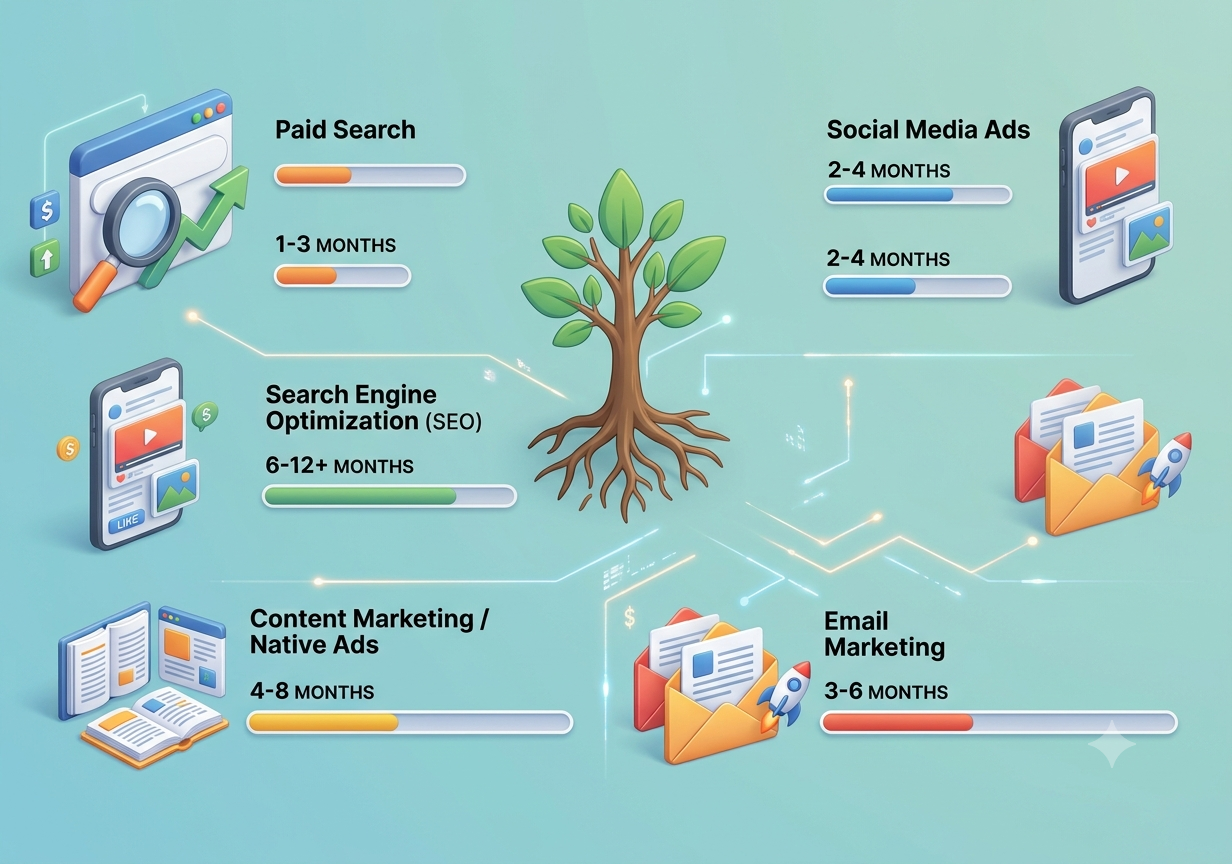
Getting results from performance marketing takes time, and the timeline can vary from one business to another. You may start noticing early signs of improvement within 2–4 weeks, such as increased website traffic, clicks, leads, or initial sales. However, achieving consistent and profitable ROI usually takes longer. It can take around 2–6 months to collect enough data, understand audience behavior, identify what’s working, and optimize the campaigns accordingly.
Several factors can affect how quickly you see results, including your budget, industry, competition, marketing channel, target audience, offer, creative quality, and overall campaign strategy. Some campaigns may show results quickly, while others need more testing and optimization. The key is to give the campaigns enough time to learn and improve. Performance marketing works best when you continuously test, analyze, optimize, and scale based on what the data tells you.
Quick Answer: Performance Marketing Timeline by Channel
| Channel | First Data | Optimization Phase | Stable ROI |
|---|---|---|---|
| Google Search Ads | 1-7 days (clicks), 1-2 weeks (first leads) | 4-8 weeks | 2-4 months |
| Meta (Facebook/Instagram) Ads | 1-3 days | 3-6 weeks | 2-4 months |
| Google Shopping / Performance Max | 1-2 weeks | 4-8 weeks | 2-4 months |
| YouTube / Display | 1-2 weeks (reach pehle, conversions baad mein) | 6-10 weeks | 3-6 months |
| LinkedIn Ads (B2B) | 1-2 weeks | 6-8 weeks | 4-6+ months |
What Counts as “Results” in Performance Marketing?
There is no specific performance marketing results timeline that guarantees when you will start seeing results.
Early on, you might see more clicks, website visits, enquiries, leads, or registrations. For an e-commerce business, purchases and ROAS may matter the most, while a service business may focus more on qualified leads or calls.
So, instead of looking only at clicks, it’s important to see whether those actions are actually helping the business move closer to its main goal.
Performance Marketing Results Timeline: Month-by-Month
The performance marketing results usually become clearer as more data comes in. Here’s what you can generally expect at each stage.
Week 1-2: Setup, Tracking and Learning
The first couple of weeks are about getting things set up and observing the reactions of people to the campaign. You’ll begin to see statistics like clicks, impressions, search terms, audience behaviour, and even leads or sales, if you’re using the platform to generate revenue.
Week 3-4: Early Data and First Results
There’s more data to look at at this stage. See which of the keywords, audiences, ads or creatives are yielding better results. This is typically the time when you will really understand what is effective and what is not.
Month 2-3: Optimisation
When there is enough information, it’s time to begin making changes based on what you are seeing. This may involve tweaking the budget, exploring new creatives, shifting audiences, refining keywords, or editing the landing page.
Month 4-6: Scaling
Once you’re seeing good results in the campaign, you can begin to allocate more resources to the items that are successful. New audiences and campaigns can be tested, too. This is when it isn’t just about achieving results; it’s about ensuring that these results are consistent and scalable.
What Is the Learning Phase in Ads and How Long Does It Last?
New campaigns typically take a bit of time to gather data and identify who is clicking on the ads. Due to this, the initial performance may vary significantly.
Meta has a learning phase, and the system is collecting data on delivery and conversions. Google Smart Bidding also requires a sufficient amount of conversions to make more informed bidding decisions. Often, making changes to the budget, targeting, or campaign setup during this period can also make it challenging to figure out what is working and what is not.
Factors That Decide How Fast You See Results
A few different things can affect how quickly you start seeing results from a campaign:
- Budget and bidding strategy
- Landing page and conversion rate
- Offer and product-market fit
- Tracking setup
- Audience size and competition
- Industry and sales cycle
- Seasonality
- Campaign management and experience
For example, an e-commerce product might get a purchase fairly quickly, while a B2B service can take several weeks before a lead actually turns into a customer.
How Long Does Google Ads Take to Show Results?
Google Search Ads can begin driving traffic within a few days through its ads being displayed when people are already searching for a product or service.
In the first week, you will primarily inspect your keywords, ads, search terms, and tracking to ensure that things are operating as expected. By weeks 2–4, there’s usually more data to understand which searches are bringing the right kind of traffic. Over the next few months, the campaign can be improved based on the conversion data.
Example: A Mumbai clinic running Google Ads may start getting clicks within a few days and enquiries within the first few weeks. But it can take longer to see whether those enquiries are actually turning into paying customers
How Long Does Meta (Facebook & Instagram) Ads Take to Show Results?
During the initial weeks, companies may experiment with various creatives and audiences to determine which ones resonate with their target audience. During the early weeks, businesses can try out various creatives and audiences to decide what individuals react to. After a few weeks, around 4-6, it’s generally possible to see what is working out more successfully, and where money can be saved.
For example, a D2C beauty company would soon be able to see which of their videos are getting audience attracted , but it can take a few weeks to see where their creatives are actually driving sales.
How Long Do Results Take for B2B vs E-commerce vs Lead Gen?
The journey will vary significantly depending on the business, primarily because the customer journey is not consistent across all customers.
B2B: It takes longer since a lead can be around for calls, demos, proposals, and approvals until they become a customer.
E-commerce: It may be faster to get results as customers can go directly to the website, select a product and buy it.
Lead Generation: You will likely start to get leads rapidly, but what is far more important is the number of leads that are actually relevant to you, and how many of the leads convert to customers.
Why Are My Ads Not Working Yet?
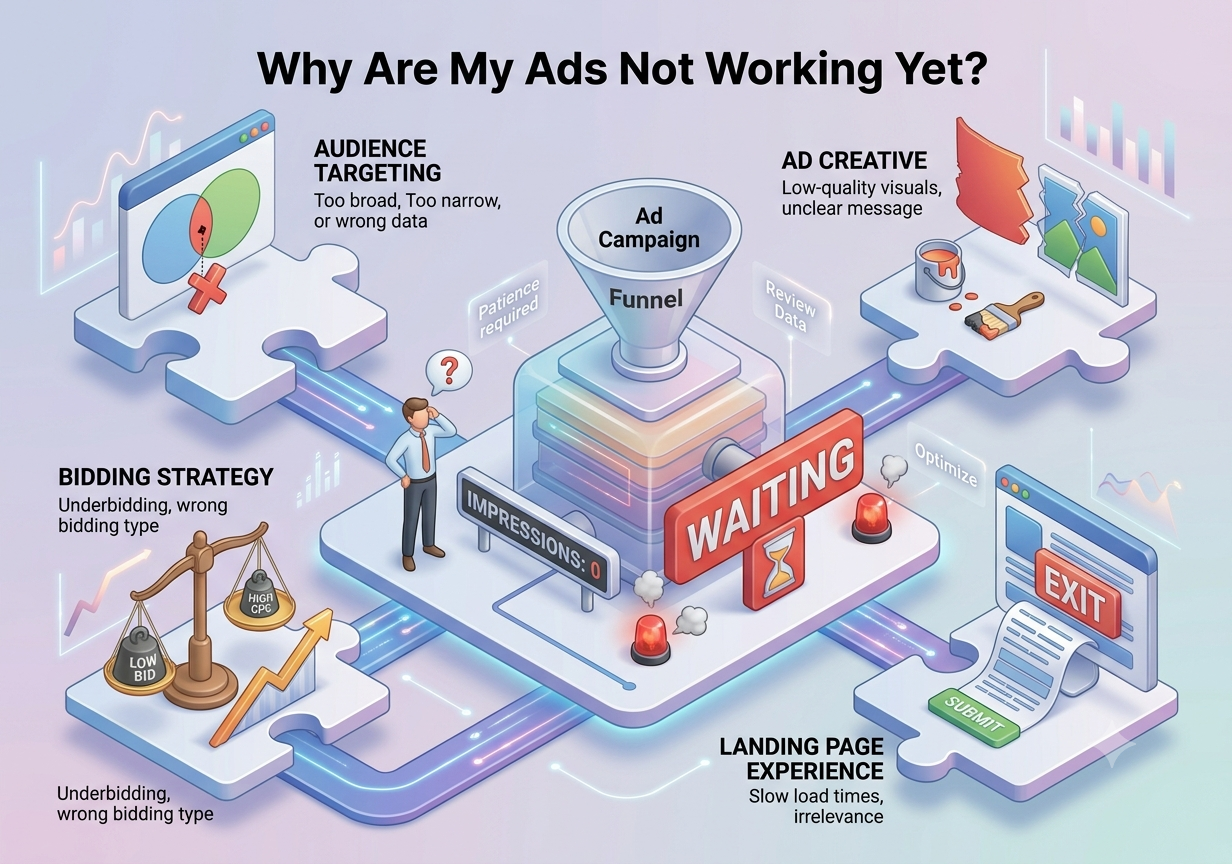
If your campaign isn’t getting the results you expected, it may not be a case of simply giving it more time. There could be a problem somewhere in the campaign that needs to be fixed.
Common reasons include:
- Tracking isn’t set up properly
- The budget is too low to collect enough data
- The ads are reaching the wrong audience
- The creatives aren’t getting enough attention
- The landing page is slow or confusing
- The offer isn’t strong enough
- Too many changes are being made while the campaign is still learning
Before putting more money into the campaign, it’s worth checking where people are dropping off and what might be stopping them from taking the next step.
How Much Budget Do You Need to See Results?
There isn’t a set budget that works for every performance marketing campaign. It can vary based on the channel you’re using, where the competitors are, the CPC or CPM, conversion rate, amount of audience and the value of each customer.
The important part is to have sufficient funding to gather valuable data. When you have many campaigns or audience segments, you might not have enough information to know what works or what doesn’t.
What Are Good Performance Marketing Benchmarks?
While there are many metrics to keep an eye on, such as CTR, CPC, CPA, conversion rate and ROAS, there is no one-size-fits-all metric. What may work for one company may not be as affordable for another company, depending on their margins, products and customer value.
Don’t just compare your numbers to industry averages; it’s better to also look at your own past performance. This will help you see if your campaigns are getting better and if the price to acquire each customer is worth your business.
When Should You Pause, Fix, or Scale a Campaign?
Don’t make a big decision based on just one bad day. Consider overall traffic, spend, conversions, and the length of time it typically takes your business to close a customer.
Stop when it is possible to get enough data from a campaign, but it does not generate any return on investment.
Correct, if you are getting clicks, but not many conversions. Check the audience, offer, landing page, tracking, and creatives to see where the problem might be.
Scale when the campaign is continuously performing with profitable results, and the numbers are sufficient to warrant a budget increase.
Performance Marketing vs SEO: Which Shows Results Faster?
Traffic and data can start coming in almost immediately through performance marketing, as ads can be live and seen by people almost right away. Unless you’re using SEO, which will typically take longer because you have to gain visibility and rank in search engines.
But you don’t necessarily have to choose one over the other. In the short term, you can use performance marketing to drive traffic and customers, and in the long term, you can use SEO to develop a reliable source of organic traffic. Both are used in a variety of marketing campaigns by many businesses
FAQs
How long does performance marketing take?
You can start seeing early results within 2–4 weeks, such as clicks, website visits, leads, or enquiries. However, consistent and profitable results can take around 2–6 months, depending on factors like your budget, industry, competition, audience, offer, and the channel you’re using.
How quickly does performance marketing work?
Ads can start generating clicks and traffic within a few days, especially when the campaign is set up properly. However, getting actual leads or sales can take a little longer. The timeline depends on factors like the campaign type, budget, audience, industry, offer, and how quickly people make a buying decision.
When does performance marketing start working?
Most campaigns start giving useful data within the first few weeks. This helps you understand what’s working and what needs to be improved. As more data comes in, you can make better decisions about your budget, audience, creatives, and overall campaign strategy.
How long does it take to see results from performance marketing?
Early results can appear within a few weeks, while stable ROI usually takes longer. The exact timeline depends on factors like your budget, industry, channel, audience, and offer. Some campaigns may start generating leads or sales quickly, while others may need more time and data before you can clearly see consistent returns.

Leave a Reply