
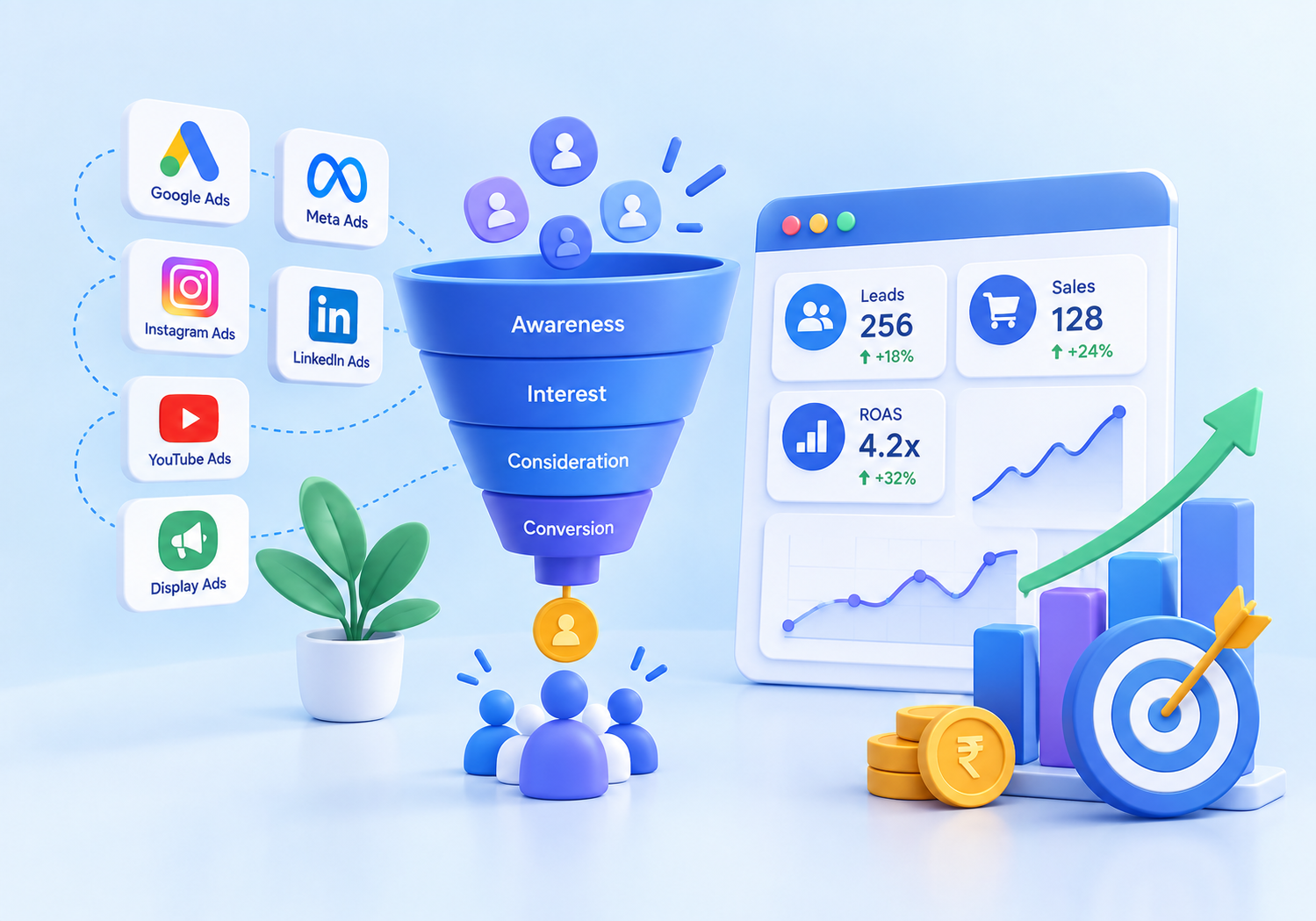
How Does Performance Marketing Help Businesses Get More Customers?
Acquiring new customers isn’t always an easy task. You can invest in advertising, continue social media marketing, and drive traffic to your website, but this doesn’t necessarily mean you’re getting more customers. There comes a time when it’s important to understand if all of the marketing is paying off.
There, where performance marketing comes in, instead of focusing just on metrics such as reach, impressions or clicks, it also has a keen focus on what people actually do. Have they completed a form, made a purchase, signed up for something, or sent an enquiry? These steps provide you with a much better understanding of where your marketing budget is going and if it’s working.
We’re going to analyze how performance marketing can be used to identify potential customers, convert interested visitors into leads or purchases, and optimize the campaigns based on what is actually occurring.
How Performance Marketing Drives Customer Acquisition
The primary goal of performance marketing is to get your ads in front of people who are more likely to be interested in the product you’re promoting. Do not display all of the ads to all people. Rather, you attempt to get in touch with the individuals who are most likely to be your clients.
Reaching Customers With High Purchase Intent
When people view an ad, some people are seeking a product or service. If a prospective customer has looked up a service that you offer on Google, they may have already had some interest or be thinking about purchasing it.
If your ad is shown when they are searching, you will have a better chance of catching their eye and directing them to your site or to an enquiry.
Finding and Targeting Relevant Audiences
Not everyone who reads your ad is going to be a customer, but that’s okay. The key is to know the correct audience you want to pursue. Performance marketing allows you to target people by their interests, their geographic location, what they’re searching for, and their interactions with your business. This enables you to utilize your financial plan on individuals who are more inclined to care about what you have to offer.
Turning Ad Clicks Into Leads and Sales
Getting someone to click an ad is only the first step. The next step is getting them to take action, whether that’s filling out a form, making a purchase, booking an appointment, or contacting the business.
This is why the ad, landing page, offer, and call to action all need to work together.
Bringing Interested Customers Back With Retargeting
Not every person visits a website on the first time with the intention to make a purchase. Someone may check out a product, browse through your services, and even add some to their shopping cart and abandon the website.
Retargeting can be used in this case. You can show ads to people who have previously visited your website or otherwise engaged with your business. They have some familiarity with your brand, and it’s a good idea to give them something more relevant to show them and provide another reason to keep coming back.
The Role of Performance Marketing Across the Customer Journey
Customers usually don’t see a brand for the first time and immediately decide to buy from it. There are usually a few steps in between. Performance marketing can help businesses stay connected with people at different points of that journey.
Building Awareness With Targeted Campaigns
The first thing you need is for people to actually notice your brand. Targeted campaigns help you reach people who are more likely to be interested in what your business offers, instead of showing your ads to just anyone.
Generating Interest and Website Traffic
Once people have seen your brand, you want to give them a reason to know more about it. They might visit your website, look at your products, check your services, or spend some time understanding what you actually offer.
Converting Interested Visitors Into Customers
Once a person is prepared to take action, the next step is to make it easy for them to do so. This may be the purchase of a product, completion of an enquiry form, booking a call or signing up for something.
Re-engaging After the First Interaction
People don’t always make a decision the first time they visit your website. They might look at a product, check your services, or click on an ad and leave without doing anything. Retargeting helps you reach these people again and bring your brand back in front of them when they’re ready to take the next step.
Performance Marketing Channels That Help Businesses Get Customers
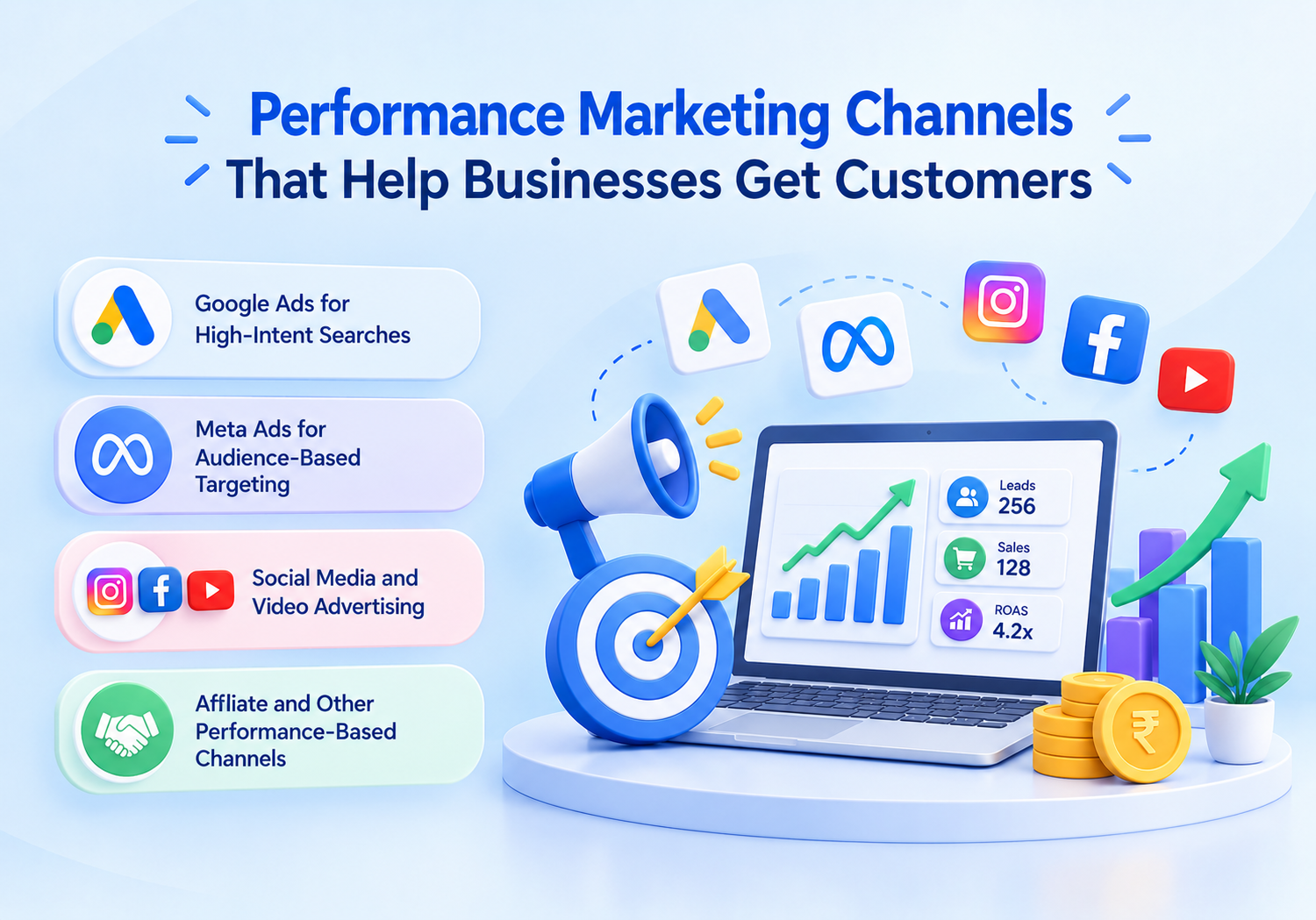
There are several channels businesses can use for performance marketing. Which ones make sense depends on the audience you’re trying to reach, what you’re selling, and what you want to get from the campaign.
Google Ads for High-Intent Searches
When people are actively looking for a product or service, Google Ads can be effective. If the person is interested in what you have to offer, then when they see your ad at the right moment, they may visit your website or make an enquiry.
Meta Ads for Audience-Based Targeting
The way Meta Ads work is a bit different. Rather than relying on users to look for them, you can display banner ads that are personalized to their interests, behavior, geographic location, demographics, and other factors or conditions that they’ve experienced with your brand. As far as social media goes, Facebook and Instagram are likely to get you in front of new audiences and help you stay in touch with those who may have already shown an interest.
Social Media and Video Advertising
Social media and video ads provide businesses with greater space to display what they have to offer. They can be used to introduce a product or explain a service, or even simply to create brand awareness amongst a new audience. They can also help you to get people back to your website or a specific product page.
Affiliate and Other Performance-Based Channels
Affiliate marketing is another way businesses can reach customers. In this case, partners promote your products or services and earn based on the results they bring, such as sales or leads. Depending on the business, other partnerships that work on a performance basis can also be used.
Turning Website Traffic Into Paying Customers
Getting people to visit your website is only half the job. Just because someone clicks on your ad doesn’t mean they’ll become a customer. What happens once they land on your website can make a big difference.
Create Landing Pages That Actually Convert
The landing page should provide a clear message to your visitors, outlining the service or product you’re offering and what they should do next. If it’s too crowded, too confusing, and doesn’t provide a good reason to take action, there is a good chance that they will bounce.
Keep Your Ads and Landing Pages Consistent
If you’re advertising a specific product or service or offer, the landing page should convey a similar message. If people see ads that are different from what they anticipated, they might wonder if they’re on the right website. When users click on an ad and get a completely different thing, it can be confusing and may make them question if they are on the right website.
Make Your Call to Action Clear
It is inappropriate for visitors to have to work out what to do next. Whether they’re looking to ‘Buy Now‘, ‘Get a Quote‘, ‘Book an Appointment‘ or ‘Enquire Now‘, ensure that your CTA is clear, prominent, and communicates what they need to do next.
Keep Testing and Improving
It’s not always necessary to make big changes to achieve better results. Sometimes, something as simple as changing the headline, button, offer, form, or page layout can make a difference. Experiment with various renditions, observe the reactions and refine the experience based on the feedback.
Using Data to Improve Customer Acquisition
The great thing about performance marketing is you can see the results of your campaign. Businesses can use real data to understand what is really driving results, and make better decisions instead of guessing.
Tracking Leads, Sales and Conversions
Conversion tracking lets you know what occurs after people click on your ad. This may involve buying a product, completing a form, calling a number, signing up or scheduling an appointment, depending on the type of business.
Understanding Customer Acquisition Cost
Customer acquisition cost (CAC), indicates the amount spent to acquire a new customer. It helps you understand if your marketing budget is worthwhile for your company.
Measuring CPA, Conversion Rate and ROAS
Different metrics can give you varying results on your campaigns: CPA, conversion rate, ROAS, etc. Combined, they provide a much clearer picture of your results than either clicks or impressions.
Identifying Which Campaigns Drive Real Results
As you start getting more data from your campaigns, you can begin to identify high-performing campaigns, audiences, ads, and platforms. This will make it simpler to determine what’s succeeding, make adjustments if necessary, and redirect more money into the areas that are doing well.
Performance Marketing for Different Types of Businesses
Performance marketing can be used in any business. The strategy may vary depending on the product/service and purchasing habits of customers.
E-commerce and D2C Brands
Performance marketing offers a range of benefits for e-commerce brands, including product discovery, website traffic, driving conversions, and encouraging repeat visits, all via channels like Google Ads and Meta Ads.
Local and Service-Based Businesses
Local businesses can use targeted campaigns to reach people in specific areas and generate calls, enquiries, bookings, or visits.
B2B and Lead Generation Businesses
Performance marketing can be utilised by B2B businesses to target potential business customers by sending enquiries via Search Ads, LinkedIn, social ads, and more.
Startups and Small Businesses
In smaller businesses, performance marketing can be a method to gain a small amount of money initially, to experiment with various strategies, and learn and see the outcome before committing more funds to a campaign.
From First Customer to Scalable Growth
Getting your first few customers is just the starting point. Once a campaign begins to deliver consistent results, the next step is figuring out how to grow it without losing what’s already working.
Starting With a Controlled Advertising Budget
Don’t overinvest in a campaign from the get-go. Going with a smaller budget allows you to try out various audiences, offers, creatives, and platforms without investing more money.
Testing Campaigns Before Scaling
Before increasing your budget, take some time to understand what’s actually working. Testing different parts of the campaign helps you identify what is driving results and reduces the risk of putting more money into something that hasn’t been properly tested.
Expanding Successful Campaigns
Once a campaign is consistently bringing in good results, you can start increasing the budget gradually. You can also look at expanding the campaign to new audiences while keeping an eye on performance.
Exploring New Audiences and Channels
Growth doesn’t necessarily require additional funds for the same campaign! It even allows you to try out new audiences, platforms, products or advertising channels. This can aid you in identifying new avenues for reaching potential customers and increase opportunity for growth.
Common Performance Marketing Mistakes That Affect Customer Acquisition
Having a good advertising budget doesn’t always guarantee good results. When the basic aspects are flawed, it could mean spending more money and getting very little back. One of the common factors that may impact the performance of campaigns are:
Targeting the Wrong Audience
You’re not going to get a lot of leads or customers using your ads—if you’re displaying them to the wrong people. It’s as vital to reach the right audience as it is to make a good ad.
Optimising for Clicks Instead of Conversions
You can get a lot of clicks and few customers for your campaign. While clicks are useful to view, conversions tell you so much more about the traffic that is actually converting.
Sending Traffic to Poorly Optimised Landing Pages
No matter how good the ad is, if the landing page is not clear or easy to use, it will lose potential customers. When individuals do not comprehend the offer or can not determine what to do next, they are likely to leave without doing anything.
Scaling Campaigns Without Enough Data
When you start seeing some success, it may be easy to go over budget. However, when there is not enough data available, you might not be sure what works and what doesn’t. With enough time dedicated to gathering valuable data for the campaign, you can make more informed decisions prior to scaling.
How to Build a Performance Marketing Strategy for Customer Acquisition
You don’t need to have a complicated performance marketing strategy. It’s important to understand what you want to do and have a clear indicator you are on the right path.
Define Your Customer Acquisition Goals
Determine what you really want people to do before you start your campaign. This may be a purchase, a form, a phone call to your business, an appointment, signing up or a particular action
Identify Your Target Audience
Try to learn about the audience to which you are addressing. Consider their location, their intent, issues they may have, and where they typically find products or services like yours. The more you know about your audience, the more easily you can develop campaigns to engage with your audience.
Choose the Right Marketing Channels
You don’t have to advertise everywhere! Prioritize channels you have an opportunity to reach your target audience and where they are already going. Depending on your audience, business, and your campaign goal, you will need to use the right channel.
Set Up Tracking and Measurement
Ensure that key activities are being monitored before investing in campaigns. Without proper tracking, it’s difficult to know where your customers are coming from.
Test, Optimise and Scale
Get started with a strategy, gather data, test and learn from it, and adjust spending over time on successful campaigns.
Frequently Asked Questions
How Quickly Can Performance Marketing Bring New Customers?
It depends on the business, budget, audience, offer, competition, and campaign setup. Some campaigns can start generating leads or sales soon after launch, while others need more testing before results become consistent.
Is Performance Marketing Suitable for Small Businesses?
Yes. Small businesses can start with a controlled budget and use the data from their campaigns to understand what is working before increasing their spending.
How Much Should a Business Spend on Performance Marketing?
There isn’t one budget that works for every business. The right amount depends on the product or service, customer value, competition, target audience, and what the business wants to achieve.
Can Performance Marketing Increase Sales?
It can help businesses reach relevant audiences, generate traffic, and drive actions such as purchases and enquiries. The final result also depends on factors such as the offer, website, pricing, product, and customer experience.
What Is the Difference Between Performance Marketing and Traditional Marketing?
Performance marketing focuses heavily on measurable actions such as leads, sales, and conversions. Traditional marketing can also be measured, but it often places more emphasis on broader awareness and reach.
Which Performance Marketing Channels Should a Business Use?
It depends on the business and its customers. Google Ads can be useful for capturing search demand, while Meta Ads and other social platforms can help businesses reach and retarget specific audiences.
Conclusion
Performance marketing gives businesses a more measurable way to approach customer acquisition. Instead of simply spending money on advertising and hoping it works, businesses can track what happens after people see or click an ad.
From finding the right audience and generating traffic to improving conversions and scaling successful campaigns, the focus stays on actions that contribute to the business.
The key is not simply to spend more on advertising. It’s to understand what is working, make changes based on the data, and gradually build a customer acquisition system that can grow with the business.

Leave a Reply