
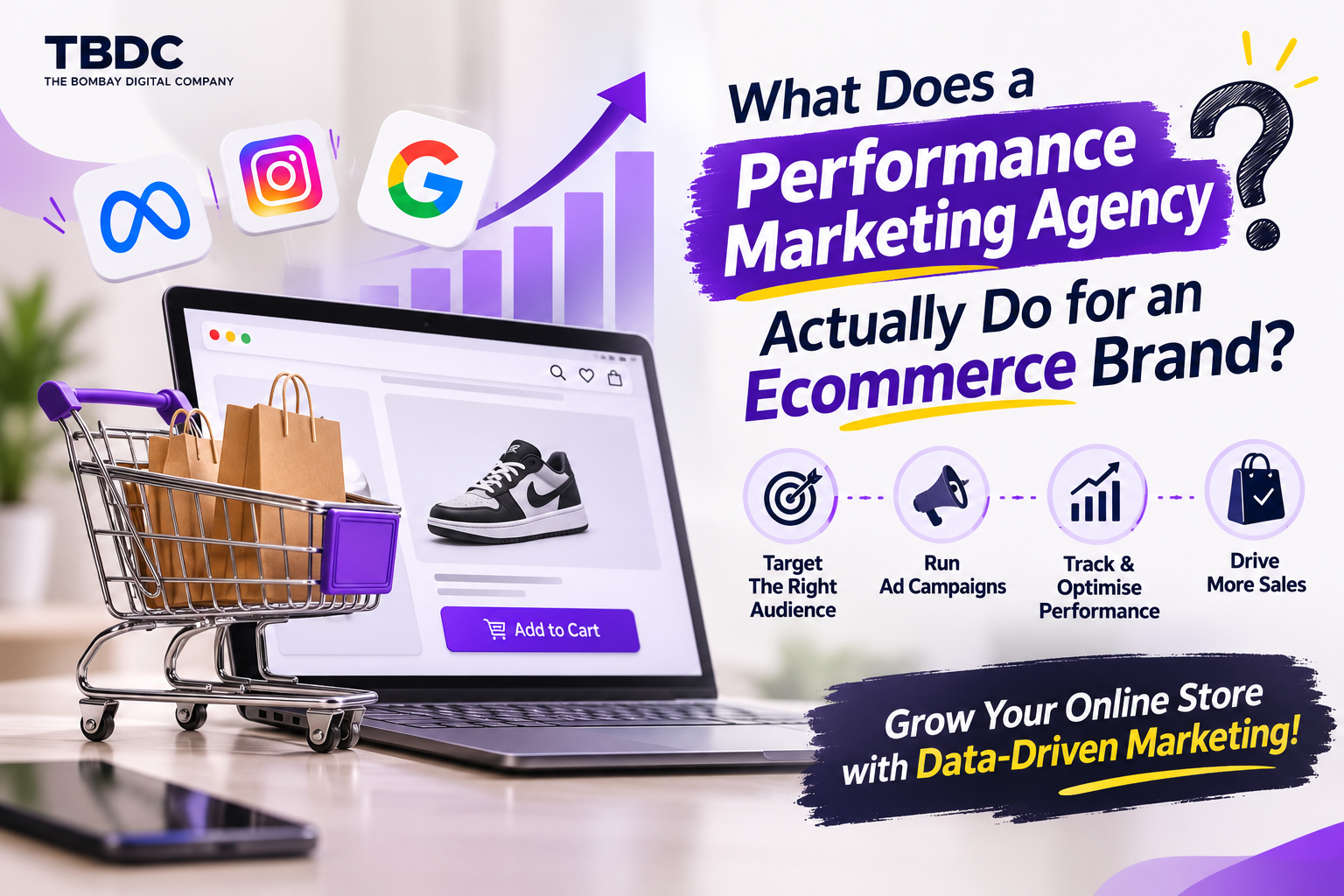
What Does a Performance Marketing Agency Actually Do for an Ecommerce Brand?
One of the major methods for people to discover and buy products on the web is by shopping online. Whether it’s clothing, skin care, electronics or home decor, shoppers have a wide variety of choices before buying. It provides ecommerce brands with a platform to connect with customers via Instagram, Facebook and Google. A performance marketing agency for ecommerce brands can assist ecommerce companies to maximise the use of these platforms by handling ad campaigns and determining the best audience, developing compelling product ads, and monitoring sales. It also analyzes customer usage of the website and what improvements can be made to get a better result. The services offered by The Bombay Digital Company (TBDC) in digital marketing can help ecommerce businesses set up their online presence and achieve their marketing goals.
What Does a Performance Marketing Agency Do?
A performance marketing agency handles the advertising strategies that would enable an ecommerce business to attract more potential buyers and make sales online. Its work doesn’t end with the creation of ads and the investment of money. The team also takes time to get to know the product, who it may interest and how the public reacts to other campaigns. For an ecommerce company, that can imply more traffic to your website, more product sales, and re-engaging customers who abandoned your site without purchasing, and driving repeat customers.
Some of the key responsibilities of a performance marketing agency for ecommerce brands include:
- Designing ad campaigns: Determining what products to advertise, where to place ads and how to allocate the advertising dollars.
- Running Facebook and Instagram Ads campaigns and Google Ads campaigns to connect with people who are interested in the products.
- Researching consumers’ interests, shopping habits, age groups and buying behaviour.
- Generating attention-grabbing product photos, promotional videos, Reels, carousel ads and copy.
- Monitoring the Internet traffic: Knowing the number of visitors to the store, how many are interested in the goods, add them to a cart, and buy.
- Optimising campaigns: Testing to see what works best for different audiences, ads and budgets.
- Making performance reports: Providing information on ad spend, website visits, cost per purchase, conversions and return on ad spend (ROAS).
Each of these activities is in a different phase in ecommerce marketing. Let’s get to know how the agency treats them and how they are helpful in the overall development of an online shop.
Managing Meta Ads and Google Ads
| Comparison | Meta Ads | Google Ads |
| Platforms | Facebook and Instagram | Google Search, Shopping and Display |
| Customer behaviour | Discovering products while scrolling | Actively searching for products |
| Ad formats | Images, Reels, videos and carousels | Search, Shopping and Display ads |
| Best suited for | Product launches, offers and brand discovery | Reaching people with purchase intent |
| Main goal | Creating interest and demand | Generating relevant traffic and sales |
Finding the Right Target Audience
Banners for all could be a viable marketing budget allocation for an e-commerce brand. The agency should find out who is more likely to be interested in the products.
Some of the most common audience groups are:
- New visitors: Customers who are new to the brand.
- Website visitors: Users who have visited the online store.
- Add-to-cart: Users who added products to their cart but failed to buy them.
- Existing Customers: Customers who are current customers of the brand.
- Lookalike audiences: New audiences that have similar attributes to those of existing audiences.
For example, a skin care firm can display ads of its products to the new audience, and have various campaigns for users who already came to the site.
This enables the brand to have a different message for those who are trying it for the first time, and for those who already know about its products.
Running Retargeting Campaigns
Sometimes customers purchase later on after visiting the website. They may explore some products, search for other websites’ prices or just wait for a later time to purchase. This is very prevalent in the ecommerce industry, and that’s why brands are spending so much money on retargeting ads to keep in touch with those who have already expressed interest.
A performance marketing agency can develop unique retargeting campaigns for:
- Website visitors: Users who visited the online store but didn’t make a purchase.
- Abandoners: Users who added products to their cart and didn’t finish the checkout process.
- Product page visitors: Users who browsed a product page.
- Previous Customers: Potential customers who may be interested in new collections or new products that have just been launched.
- Social media users: Users who liked, commented, or interacted with the brand’s postings and ads.
For example, someone visits an online footwear store, checks out a pair of sneakers and leaves without buying them. They could see the same pair or other styles in the collection in the Instagram ad a couple of days later. This provides the brand with one more chance to attract the visitor’s attention and return them to the website.
Monitoring and Optimising Campaigns
The agency continually monitors ad performance after its launch. It analyzes which campaigns are driving sales, which creatives are receiving the attention and where the advertising dollars are going.
This may involve:
- When not enough people respond to advertisements, pausing them and trying innovative concepts and ad copy.
- Adjusting audience targeting and increasing budgets on campaigns delivering good results.
- Analysis of product-wise sales and campaign performance also provide periodic reporting to the business.
- Optimisation of a campaign is a continuous process. A strategy which works at a festive sale might not work at a normal month and so the advertising strategy should be reviewed regularly.
Why Do Ecommerce Brands Hire Performance Marketing Agencies?
| Audience Group | Who They Are | How Retargeting Ads Can Help |
| Website Visitors | People who visited the online store but left without placing an order. | Show them relevant products or offers to encourage another visit. |
| Cart Abandoners | Shoppers who added products to their cart but didn’t complete the checkout. | Remind them about the products they left behind and encourage them to complete their purchase. |
| Product Page Visitors | People who viewed specific product pages but didn’t buy anything. | Show advertisements featuring the same product or similar options. |
| Previous Customers | People who have already purchased from the brand. | Promote new arrivals, related products and upcoming offers. |
| Social Media Users | People who liked, commented on or interacted with the brand’s social media content or ads. | Introduce them to products and encourage them to visit the online store. |
Frequently Asked Questions (FAQs)
What is the role of a performance marketing agency in ecommerce?
A performance marketing agency takes care of the company’s online ads. This means identifying the target audience, developing ads, overseeing spend and monitoring and analysing which ads are generating sales.
Which platforms do performance marketing agencies use?
There are several platforms you can use, including Meta Ads and Google Ads. Meta provides brands with ways to get their products into people’s lives on Facebook and Instagram, and Google Ads can help brands reach people who are actively looking for products.
Does a performance marketing agency create product advertisements?
Yes. Many agencies also perform creative tasks such as product photoshoots, promotional videos, Instagram Reels, carousel ads, ad copy for various campaigns and more.
How does performance marketing help increase online sales?
It can help businesses to target those who are interested in what they offer, bring these individuals to their website, and remind the site visitors of items they have actually previously seen. Agencies also analyse the returns of the campaigns and adjust the campaigns for better results.
What is ROAS in ecommerce marketing?
ROAS is an acronym for Return on Ad Spend. It indicates as to the amount of revenue your business generates from your advertising dollar. If in a day you spend ₹1000 on ads and make ₹4000 in sales, then your ROAS is 4x.

Leave a Reply